



- July 31, 2025
- by NCS Global
- 5mins read
Automation in accounts receivable is rapidly shifting from a competitive advantage to an operational imperative. By embedding AI-driven workflows into invoicing, collections, and forecasting, accounting firms turn once manual bottlenecks into streamlined revenue engines.
The global accounts receivable automation market already tops USD 3.8 billion and is projected to more than double to USD 8.8 billion by 2030 at a 12.9 percent CAGR. Leading Firms that act now accelerate cash flow, strengthen client relationships, and free finance teams for strategic work.
Why the Surge in Receivables Automation?
Traditional AR relies on spreadsheets, phone calls, and paper trails that drive up error rates and drag down liquidity. Studies show manual invoice processing costs USD 15-16 per invoice, while automation cuts that figure below USD 3, an 80 percent saving.
Equally compelling, payments automation can shrink Days Sales Outstanding (DSO) by up to 22 percent, releasing cash that fuels growth. Small wonder 82 percent of firms not yet automated plan to adopt AR solutions within two years.
What Is Accounts Receivable Automation?
Accounts receivable automation combines cloud software, robotic process automation, and artificial intelligence to manage the full billing cycle invoice generation, payment reminders, collections workflows, and cash application without repetitive human touchpoints.
Data flows directly from your ERP to customer portals; AI reconciles payments in real time and flags disputes before they age. The result is a single source of truth that makes cash positioning immediately visible.
Artificial Intelligence in Accounts Receivable
Artificial intelligence in accounts receivable elevates automation from efficiency to insight. Machine learning models analyse historical payment behaviour to predict late payers with uncanny accuracy, letting teams intervene early.
Natural language engines draft personalised reminder emails, while predictive AI-powered financial forecasting dashboards refresh automatically each time a payment posts. In mid-market firms, 91 percent report improved cash flow after deploying AI enabled AR systems.
Market Leading Tools Powering Accounts Receivable Transformation
- Upflow – Cloud platform offering collaborative collections, customer payment portals, and live DSO analytics.
- Chaser – Smart, AI-driven chasing sequences that adapt the tone of voice for every debtor, making follow-ups more effective and human.
- InvoiceSherpa – Automated reminders and direct payment links that plug into QuickBooks and Xero.
- Bill.com, Esker, Satago, and Invoiced – Suites that layer OCR, e-invoicing, and multi-currency reconciliation onto existing ERPs.
Each solution supports accounts receivable invoice automation at different scale points, so shortlist according to volume, integration depth, and regional compliance needs.
Tangible Benefits of Accounts Receivable Invoice Automation
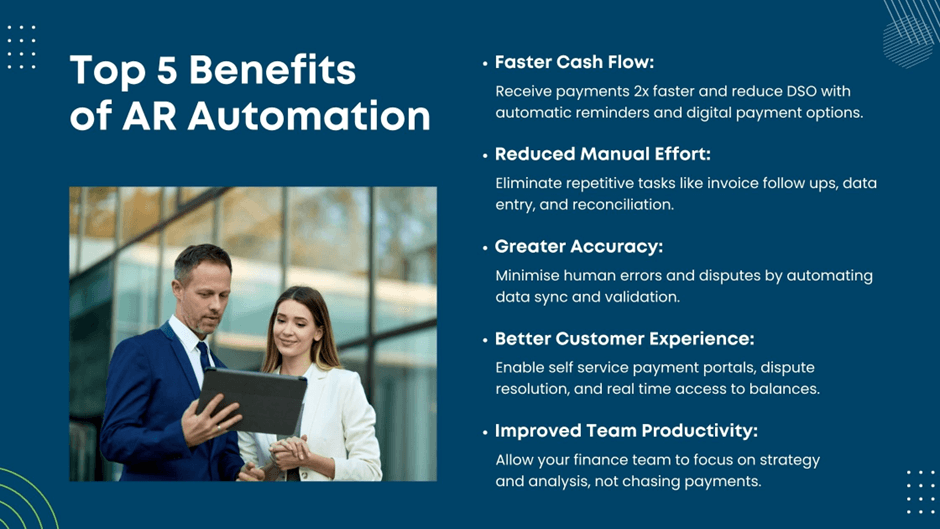
- Cost Efficiency – Slashing per invoice costs from double digits to a few dollars translates into six-figure annual savings for high-volume firms.
- Faster Cash Collection – Automated reminders, self-service portals, and real-time payment options compress payment windows and reduce DSO by double-digit percentages.
- Accuracy & Compliance – AI removes keystroke errors, generates immutable audit trails, and safeguards data for regulations such as GDPR.
- Scalability – As transaction counts rise, automated workflows absorb the load with no extra headcount.
- Insight Driven Decisions – Live dashboards surface aging trends, credit risks, and forecast gaps that manual spreadsheets hide.
Forecasting AR Invoice Automation: Seeing Around Corners
Advanced platforms now embed forecasting AR invoice automation directly into finance dashboards. By blending ERP data, seasonal patterns, and macro indicators, the software projects cash inflows weeks or months ahead.
Leaders use these forecasts to plan investments, negotiate credit lines, and time early payment discounts that lift margins.
Five Strategic Tips for Successful Receivables Automation
- Integrate First, Customise Second:
Connect the automation platform to your ERP and bank feeds before creating bespoke workflows. Clean data is the bedrock of transformation. - Segment Customers by Risk:
Use AI scores to assign gentle nudges to reliable payers and multi-channel escalations to chronic late payers, preserving relationships while securing cash. - Align Finance and Sales:
Shared dashboards give both teams a unified view of outstanding invoices, speeding dispute resolution and reinforcing credit policies. - Start with Quick Wins:
Launch with automated reminders and payment portals; expand into predictive analytics and AI cash matching once staff confidence grows.
Measure What Matters:
Track DSO, Collection Effectiveness Index, and bad debt write-offs monthly. Automation should move all three in the right direction within the first quarter.
Leverage Customer Self-Service Portals
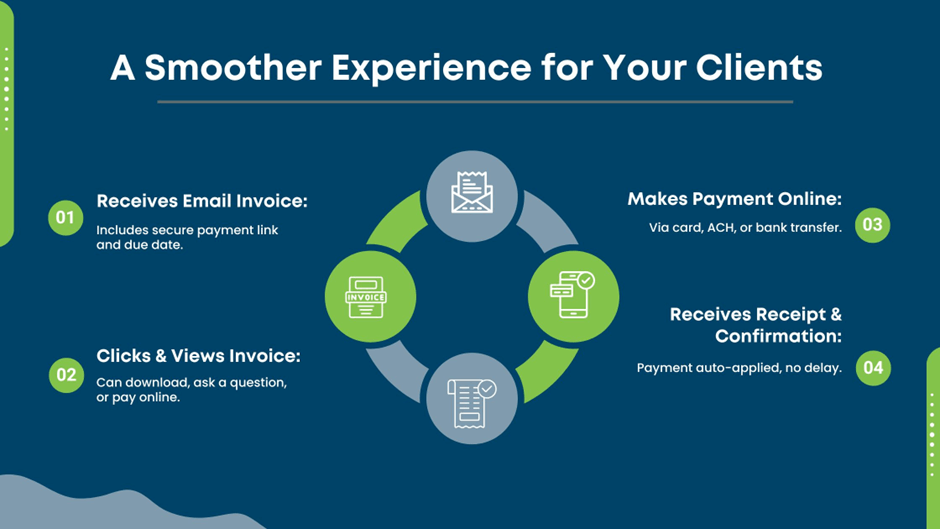
Customer self-service portals are becoming essential components of modern AR automation strategies. These platforms empower customers to view invoices, make payments, access account statements, and track payment history independently, reducing the burden on AR teams while improving customer satisfaction.
Benefits include reducing manual workloads by 80% or more, eliminating errors and disputes through better transparency, and optimising Days Sales Outstanding (DSO) as customers pay quicker when payment is easier.
Modern portals offer secure anytime access, real-time communication capabilities for query resolution, and seamless integration with ERP systems. Key features should include multiple payment options, automated notifications, downloadable receipts and statements, and robust search functionality.
Harness Data Analytics for Strategic Decision Making
Data analytics capabilities are crucial for maximising the return on AR automation investments. Advanced analytics provide deeper insights into customer payment behaviors, identify potential risks and opportunities, and enable predictive cash flow management.
Essential analytics include monitoring key performance indicators like DSO, Collection Effectiveness Index, and aging analysis in dashboards. Predictive analytics can forecast which customers are likely to pay late or default, allowing proactive management of high-risk accounts.
Data visualisation tools help finance teams identify trends, optimise collection strategies, and make data-driven decisions that improve overall AR performance. Modern AR platforms should offer customisable reporting, automated AR analytics tools, and AI-driven insights that continuously learn from payment patterns.

Frequently Asked Questions
- What is accounts receivable automation?
It is the use of software and AI to generate invoices, send reminders, collect payments, and reconcile cash automatically, cutting labor and errors. - What are the 5 C’s of accounts receivable management?
Credit, Customer, Collection, Cash, and Control are core principles guiding healthy receivables processes. - Will AI replace accounts receivable?
AI will eliminate repetitive tasks but elevate human roles toward credit strategy, customer negotiation, and analytics, not replace them. - What is the 10 rule for accounts receivable?
Best in class firms aim to keep DSO near or below ten days, signalling exceptional liquidity discipline. Automation is essential to reach that benchmark.
Propel Your Finance Team into the Future
Automation in accounts receivable elevates finance professionals from paper-chasing administrators to strategic partners who drive growth and innovation. Liberated from manual invoicing and follow-ups, they can focus on insightful analysis, strengthen client relationships, and deliver guidance that shapes long-term strategy.
By deploying receivables automation tools and harnessing artificial intelligence in accounts receivable, firms unlock lower processing costs, quicker cash conversion, and sharper forecasting accuracy.
Thoughtful adoption integrating platforms, training teams, and refining workflows turns incremental efficiencies into enterprise wide momentum and a richer customer experience.
The path to true accounts receivable transformation begins with a single decision: embrace automation now or watch competitors surge ahead. In a digital economy where speed and insight decide winners, choosing to automate is choosing to lead.
Firms looking to reduce overhead and improve scalability should consider outsource accounting services as part of their automation strategy.