



- April 22, 2025
- by NCS Global
- 5mins read
How to Find Outsourcing Partner for the Financial Industry in 2025
Outsourcing in the financial industry has become more than just a cost-cutting measure; it’s now a strategic move that enables firms to grow, innovate, and remain competitive. As the finance landscape evolves with digital transformation, compliance complexity, and ever-increasing client expectations, businesses are under pressure to deliver more — faster and better. That’s why many are exploring how to find outsourcing partner that truly aligns with their goals.
In 2025, it’s not just about outsourcing — it’s about finding a partner who understands the pulse of the financial industry.
Why Financial Firms are Turning to Outsourcing in 2025
There’s been a noticeable shift in the way financial businesses operate. Several factors are pushing firms toward outsourcing:
- Talent shortages:
The global finance sector faces a shortage of skilled professionals, particularly in specialised areas like tax compliance and data analytics. - Cost-efficiency:
Rising salaries, office expenses, and overheads make in-house teams increasingly expensive. - Tech-driven demands:
Clients expect real-time reporting, automation, and integrated systems. Not every in-house team can deliver at scale. - Compliance pressure:
Regulatory frameworks are evolving fast. Staying updated and audit-ready is easier with specialised BPO partners.
In this climate, the ability to find outsourcing companies that offer both technical depth and industry-specific expertise is a game-changer. With businesses under increasing pressure to reduce costs and stay agile, outsourcing is no longer just a strategic advantage—it’s fast becoming the norm. According to the latest stats from FYDI Global, the global outsourcing market is projected to reach $620 billion by 2025—reflecting the rising demand for cost-effective solutions across industries, including finance.
What to Outsource in Finance Today
Before choosing the right BPO provider for your company, it’s important to determine what functions you should delegate. Common outsourced functions in the financial sector include:
- Bookkeeping and transactional accounting
- Accounts payable and receivable management
- Payroll processing and tax filing
- Financial reporting and MIS dashboards
- Regulatory compliance (e.g., KYC, AML)
- Virtual CFO services
The scope of finance outsourcing depends on your internal capabilities, growth plans, and regulatory environment. A reliable finance outsourcing partner will help you assess where they can add the most value.
Key Qualities to Look for in an Outsourcing Partner
When exploring how to find outsourcing partner in 2025, remember you’re not just hiring a vendor — you’re entering a long-term partnership. Here are a few qualities to prioritise:
- Financial Industry Expertise:
Look for BPO providers with experience in the finance domain — preferably with clients in your niche (e.g., mortgage broking, fintech, accounting firms). - Up-to-date with Regulations:
Your partner should be familiar with your region’s compliance standards and financial regulations. - Technology Compatibility:
They should be proficient with the latest software you use — whether it’s Xero, QuickBooks, NetSuite, or custom ERP platforms. - Data Security & Certifications:
Ensure the partner follows strong data protection policies (GDPR, CCPA) and holds ISO/IEC 27001 or similar certifications. - Transparent Pricing:
Pricing models should be clear and documented, with no surprise costs. - Scalability:
As your business grows, your outsourcing partner should be able to grow with you. - Client Testimonials & Track Record:
Look for reviews, case studies, or references from similar-sized financial businesses.
Key Risk Indicators When Choosing an Outsourcing Partner
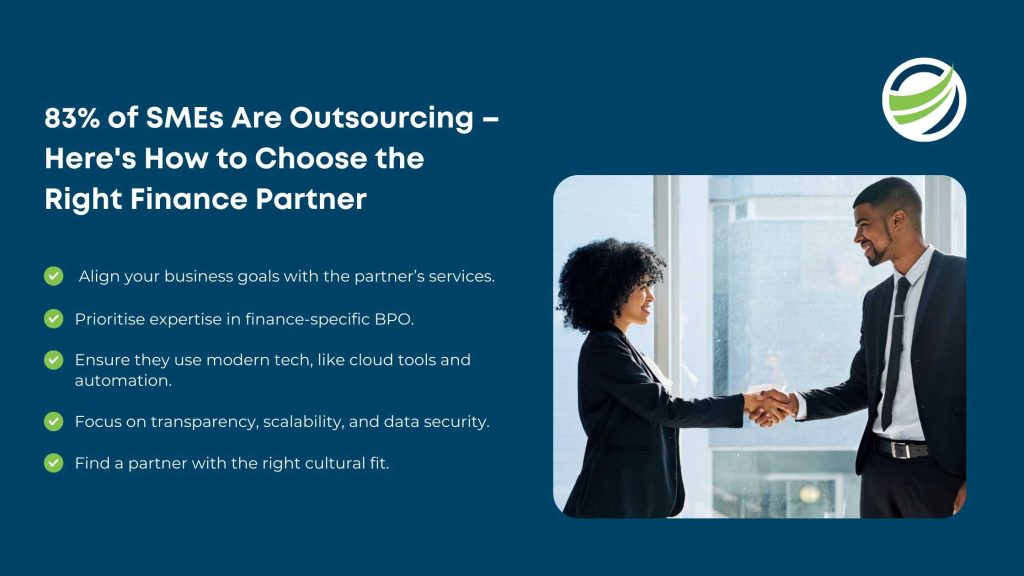
With 83% of SMEs engaging in outsourcing to remain competitive, according to the U.S. Chamber of Commerce, the pressure to choose the right finance outsourcing partner is higher than ever. Rushing into a BPO partnership without due diligence can compromise long-term goals.
While looking to find outsourcing companies, beware of these red flags:
- Vague or undocumented deliverables
- Poor communication or no dedicated account manager
- No understanding of finance-specific compliance
- Lack of transparency in pricing or processes
- Limited or no disaster recovery or backup policies
These indicators can signal future headaches, missed deadlines, or compliance issues.
Steps to Finding the Right Partner
Let’s break down the step-by-step process for choosing the right BPO provider for your company in 2025:
1. Define Your Needs
Map out what tasks or functions you want to outsource. What pain points are you solving? Be clear about your short-term and long-term expectations.
2. Research Finance-Focused BPOs
Start by identifying firms that specialise in financial services. A BPO partnership financial industry-focused provider will be better equipped to handle the nuances of your business.
3. Evaluate Technology Fit
Check if the outsourcing partner uses compatible tools and can integrate with your systems. Seamless tech integration is critical for efficient handoffs.
4. Ask for Case Studies
Don’t hesitate to ask for success stories or client testimonials. This gives you insight into how the partner operates and delivers results.
5. Start Small
Consider beginning with a pilot project. This reduces risk and lets you evaluate quality, turnaround time, and communication style.
6. Review Legal & Compliance Aspects
Have your legal team review contracts, NDAs, and data handling protocols. Ensure all compliance checkboxes are ticked before scaling the partnership.
7. Monitor & Communicate
Regular performance reviews, KPIs, and open communication channels should be in place. This ensures the relationship continues to bring value.
Trends to Watch in 2025
The outsourcing industry is evolving quickly. Here are a few trends influencing BPO partnerships in finance:
- Nearshoring:
Firms prefer working with providers in closer time zones to improve real-time collaboration. - AI-Powered Processes:
From automated reconciliations to AI-generated insights, expect outsourcing partners to deliver smarter solutions. - Niche BPOs:
Expect more specialised firms that cater exclusively to financial niches like SaaS startups, investment firms, or crypto businesses. - End-to-end Service Models:
More businesses now prefer holistic providers who offer everything from bookkeeping to virtual CFO services under one roof.
Questions to Ask Before Signing the Contract
Before finalising your finance outsourcing partner, ask the following:
- What finance sectors do you specialise in?
- How do you handle sensitive data and ensure compliance?
- Who will manage our account, and how often will we communicate?
- What KPIs will you use to track performance?
- Can you scale your services as we grow?
- What’s your contingency plan in case of service disruptions?
Conclusion
The decision to outsource financial functions isn’t just operational — it’s strategic. The right partner will support your compliance goals, drive efficiency, and contribute to long-term growth. In 2025, the question isn’t whether to outsource — it’s how to find outsourcing partner that’s aligned with your goals, understands your industry, and delivers consistently.
Whether you’re scaling up, modernising your processes, or simply looking to reduce operational overheads, investing time in choosing the right BPO provider for your company is essential. A thoughtful approach to building a BPO partnership financial industry-focused will save you more than money — it will save time, stress, and missed opportunities.