



- July 31, 2025
- by NCS Global
- 6mins read
Important Update
On 31st March 2026, NCS Global rebrands as NCSGX, moving to our new unified website at ncsgx.com. Same team, same service you know, now brought together under one name and one home. We look forward to welcoming you there.
The Rising Importance of Professional Bookkeeping
The global bookkeeping services market is expected to reach USD97.3 billion by 2032, nearly doubling from USD46.1 billion in 2024 reflecting a 9.8% annual growth rate as businesses worldwide recognize the necessity of financial clarity and compliance. In Canada, where tax regulations and audit standards are demanding, skilled bookkeeping is even more critical.Why Hire a Bookkeeper? Key Benefits
The benefits of hiring a bookkeeper extend beyond time savings to include tax optimization and business scalability.1. Save Time and Reduce Stress
Bookkeeping is time consuming; for many small business owners, it eats up 10+ hours per week that could be spent growing the business, serving clients, or innovating. By outsourcing or hiring a bookkeeper, you instantly reclaim productivity and peace of mind.2. Improve Accuracy and Avoid Costly Errors
Over 60% of accounting errors arise from basic bookkeeping mistakes like misclassified expenses and failing to reconcile accounts. Errors not only impact your bottom line, but can also attract costly audits or fines from the Canada Revenue Agency (CRA). Bookkeepers ensure records are accurate, reducing risk and enabling stress free tax filings.3. Enhanced Cash Flow Management
Consistent tracking of all financial transactions allows bookkeepers to detect anomalies, spot late payments, and maintain cash flow. Since cash flow mismanagement is the number one reason Canadian small businesses fail, this role is critical.4. Tax Optimization and Compliance
A bookkeeper for small businesses can offer scalable, affordable solutions that grow with your needs. And a professional bookkeeper keeps up with Canadian tax rules (GST/HST, payroll, and provincial taxes), minimizing liabilities and ensuring deductions aren’t missed. Small businesses using professional bookkeepers save an average of 20% on taxes annually, according to Intuit research.5. Better Financial Insights for Decision Making
Accurate, up to date books lead to clear financial reports, enabling smarter budgeting, cash flow forecasting, and long-term planning. This empowers both business owners and CPAs to identify growth opportunities and guard against trouble.6. Cost Effectiveness and Scalability
While hiring in-house staff can be expensive, outsourced or virtual bookkeeping offers flexibility and access to talent across Canada, often at a lower cost. With cloud based systems, businesses benefit from real-time data, secure record keeping, and the ability to easily scale up services during busy seasons.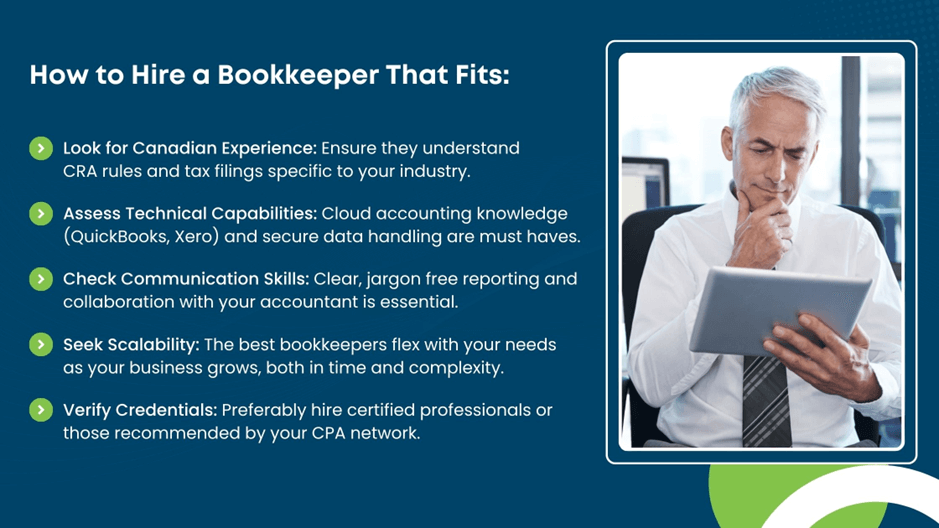
When to Hire a Bookkeeper? Signs It’s Time
- Spending significant time on bookkeeping tasks
- Missing invoice or tax deadlines
- Feeling overwhelmed by receipts and paperwork
- Without clear visibility into financial health or cash flow
- Growing transaction volume or business complexity
- Revenue surpassing $100,000 annually
The bottom line: don’t wait for a crisis. Proactive bookkeeping is a growth enabler, not just a back office task.
DIY Bookkeeping vs. Professional Bookkeeper: Making the Right Choice
Many small business owners initially consider handling their own books to save money, but this decision requires careful evaluation of the true costs and benefits involved.
DIY Bookkeeping: The Reality Check
While DIY bookkeeping may seem cost effective at first, studies highlight the substantial hidden costs it often entails.
Pros of DIY Bookkeeping:
- Lower upfront costs with basic accounting software
- Complete control over financial records
- Deeper understanding of your business finances
- Flexibility to work on your own schedule
Cons of DIY Bookkeeping:
- Time Investment: Can consume 10-20 hours per week, taking away from core business activities
- Error Risk: 60% of small business owners feel they lack adequate financial knowledge, leading to costly mistakes
- Compliance Challenges: Missing tax deadlines or incorrect filings can result in CRA penalties
- Limited Expertise: Without professional training, you may miss tax deductions or optimization opportunities
A study by Indiana University found that 60% of accounting errors result from basic bookkeeping mistakes, which can lead to missed deductions, late fees, and compliance issues that far exceed the cost of professional services.
When DIY Makes Sense vs. When to Go Professional
DIY bookkeeping may work if:
- Your business has minimal transactions (under 50 per month)
- Revenue is below $50,000 annually
- You have accounting knowledge and enjoy detailed financial work
- Your business structure is simple with no employees
Professional bookkeeping is essential when:
- Monthly transactions exceed 100
- You have employees requiring payroll management
- Revenue surpasses $100,000 annually
- Spending more than five hours weekly on bookkeeping? You could be losing valuable time.
- Compliance requirements are complex (GST/HST, multiple tax jurisdictions)
Cost to Hire a Bookkeeper in 2025
Costs vary based on service level, business size, and whether you opt for in-house or outsourced solutions. You’re probably wondering: how much does it cost to hire a bookkeeper in 2025? Let’s break it down.
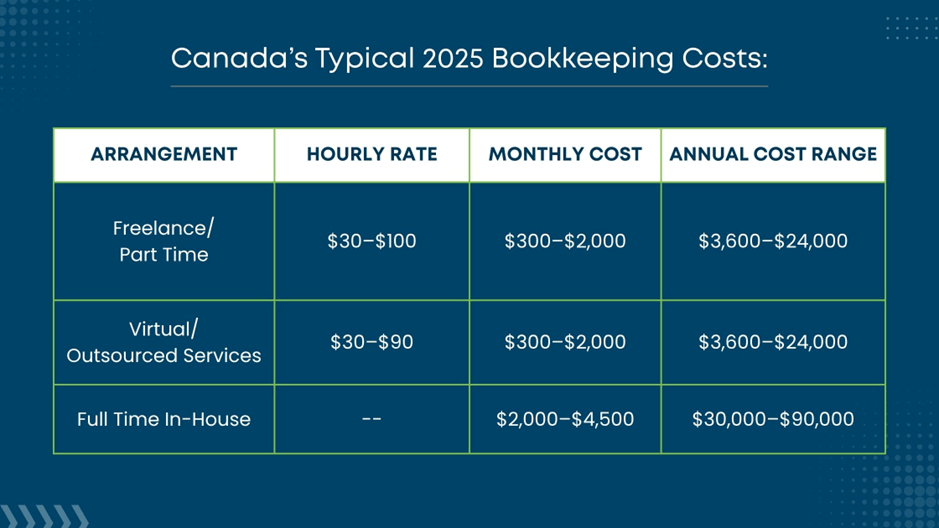
Rates vary based on expertise, geography, tech skills, and the complexity of your business needs.
- Outsourced bookkeeping is generally the most cost effective for Canadian small businesses, especially those without year round, full-time needs.
- Consider that failed DIY bookkeeping or poor quality services can result in costly fixes, lost tax deductions, or even CRA penalties.
The Bottom Line: Why Hire a Bookkeeper
The right bookkeeper not only saves you time and money, but also fortifies your business against risk, supports compliance, and empowers smarter growth decisions.
For CPAs and accountants, guiding clients to invest in bookkeeping isn’t just an added expense, it’s a vital strategy proven to increase profits, reduce errors, and propel business success.
There’s no better time for Canadian business owners and accounting professionals to rethink their approach to bookkeeping, making it a lever for operational excellence and peace of mind.
FAQ’s:
How much does it cost to hire a bookkeeper?
In Canada, bookkeepers typically charge $30-$90 per hour, with monthly costs ranging from $300-$2,000 for small businesses. Full-time in-house bookkeepers cost $30,000-$90,000 annually, while outsourced services are more affordable for most small businesses.
What’s the difference between a bookkeeper and an accountant?
Bookkeepers handle daily tasks like recording transactions, managing invoices, and processing payroll. Accountants focus on strategic analysis, tax planning, and providing business advisory services. Bookkeepers cost $30-$90/hour while CPAs charge $100-$300+ per hour.
When should I hire a bookkeeper for my small business?
A: Consider hiring when you’re spending 5+ hours weekly on bookkeeping, missing deadlines, or your revenue approaches $100,000 annually. If you have employees or complex transactions.
Can I do my own bookkeeping instead of hiring someone?
DIY works for very small businesses with minimal transactions (under 50 monthly) and simple structures. However, 60% of accounting errors come from basic bookkeeping mistakes, and 42% of small business owners lack financial literacy.
What should I look for when hiring a bookkeeper?
A: Look for Canadian experience with CRA requirements, proficiency in QuickBooks or Xero, and relevant certifications like CPB or RPB. Ensure they understand GST/HST compliance and can provide references from similar businesses in your industry.